After the pathway
Core capabilities
- 01Freestyle technique from basics to advanced
- 02Individual stroke biomechanics analysis
- 03Body rotation and balance mechanics
- 04Optimal breathing patterns — 2:1 and 3:1
- 05Building continuous swim distance
- 06Flip-turn mastery
Course content
Session-by-session pathway
Six representative sessions show one learning cycle; coaches may repeat or adjust drills to actual progress.
Assessment & foundations
- Pool / confined water
Objectives
- Freestyle technique from basics to advanced
Core activities
- The coach introduces the skill, guides focused drills and gives direct feedback.
Target capability
- Show more consistent execution and receive an adjusted goal for the next session.
Safety noteDepth, distance and flotation aids are adjusted to age and demonstrated water control.
- Pool / confined water
Objectives
- Individual stroke biomechanics analysis
Core activities
- The coach introduces the skill, guides focused drills and gives direct feedback.
Target capability
- Show more consistent execution and receive an adjusted goal for the next session.
Safety noteDepth, distance and flotation aids are adjusted to age and demonstrated water control.
Technique development
- Pool / confined water
Objectives
- Body rotation and balance mechanics
Core activities
- The coach introduces the skill, guides focused drills and gives direct feedback.
Target capability
- Show more consistent execution and receive an adjusted goal for the next session.
Safety noteDepth, distance and flotation aids are adjusted to age and demonstrated water control.
- Pool / confined water
Objectives
- Optimal breathing patterns — 2:1 and 3:1
Core activities
- The coach introduces the skill, guides focused drills and gives direct feedback.
Target capability
- Show more consistent execution and receive an adjusted goal for the next session.
Safety noteDepth, distance and flotation aids are adjusted to age and demonstrated water control.
Integration & progress
- Pool / confined water
Objectives
- Building continuous swim distance
Core activities
- The coach introduces the skill, guides focused drills and gives direct feedback.
Target capability
- Show more consistent execution and receive an adjusted goal for the next session.
Safety noteDepth, distance and flotation aids are adjusted to age and demonstrated water control.
- Assessment
Objectives
- Flip-turn mastery
Core activities
- The coach introduces the skill, guides focused drills and gives direct feedback.
Target capability
- Show more consistent execution and receive an adjusted goal for the next session.
Safety noteDepth, distance and flotation aids are adjusted to age and demonstrated water control.
Swimming is adaptive: repetition and progression depend on each swimmer demonstrating consistent ability.
Reference: Reference framework: Swim England Learn to Swim ↗Training approach
How coaching and progress assessment work
For adults who cannot swim or want to improve freestyle technique. Includes biomechanical analysis, drag reduction, and aerobic endurance.
How coaches adapt the pathway
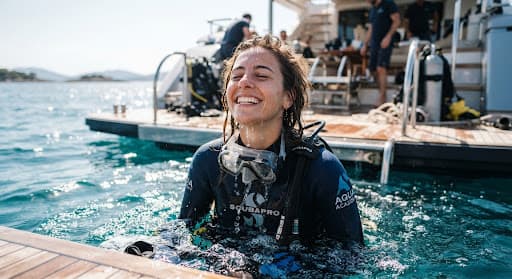
Adult Freestyle follows a progressive framework, but sequence, repetitions and challenge are adjusted after the coach observes readiness, movement quality and safety behaviour.
- Readiness is confirmed before difficulty, distance or depth increases.
- Feedback prioritises repeatable technique and safe decision-making over a single performance number.
- The next task is selected from observed capability, not from attendance alone.
From water anxiety to confidence — a complete freestyle program for adults.
How progress is assessed
- Coach observation during preparation and technical practice.
- Application with the required supervision, communication and recovery procedure.
- A progress note identifying what is stable, what needs work and the recommended next step.
Frequently asked questions
Who is Adult Freestyle for?
Adults 16+, all levels.
What are the prerequisites?
No prior experience is required.
How long does the programme take?
6–8 weeks / 18–24 sessions