.png&w=3840&q=75)
Stop the skill
End the exercise immediately when there is discomfort or loss of control.
Safety is a system of screening, supervision, equipment, communication, and continuous judgement—not a slogan.

Each decision sits where it belongs: before entering the water, during practice, and in the responsibility students carry for their own actions.
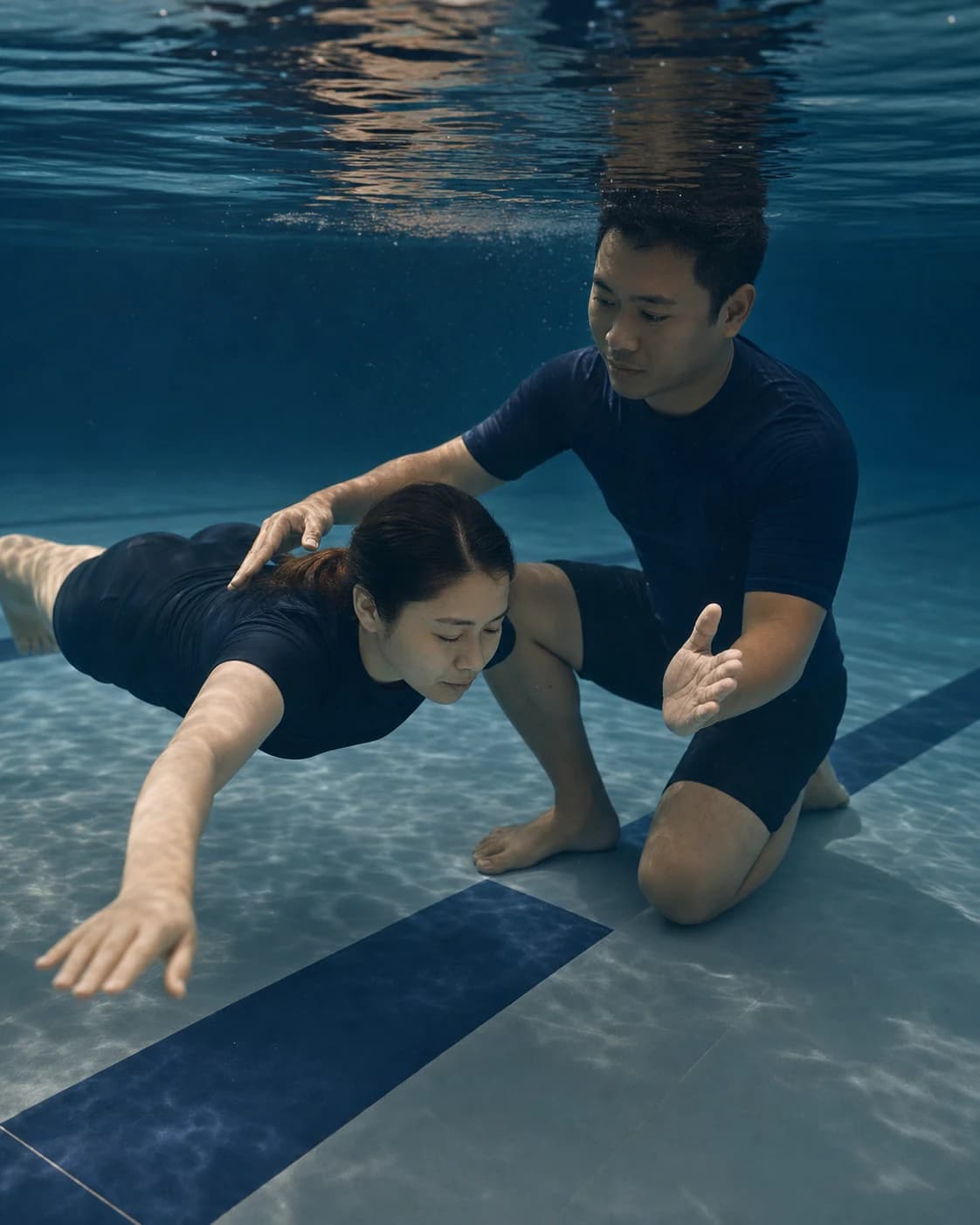
Students disclose relevant health information and complete programme-specific readiness checks before advanced skills are introduced.
Skills are introduced progressively with active supervision, defined group capacity, and discipline-specific buddy or rescue procedures.
Students must follow coach instructions, report symptoms honestly, and never practise breath-hold or advanced aquatic skills alone.
End the exercise immediately when there is discomfort or loss of control.
The student or buddy alerts the coach with an unambiguous signal.
Move the student to a safe position and do not resume the exercise.
The coach assesses the situation and determines the appropriate response.
Conditions that require specific assessment include uncontrolled asthma, epilepsy, significant cardiovascular disease, and certain medications. Disclose your full medical history and our team will advise on suitability before your first session.
Stop immediately, exit the water, and tell your coach. Never continue a session if you feel dizzy, short of breath, or unusual in any way. Your coach is trained to respond and will determine the appropriate next step.
No. Unsupervised breath-hold practice is absolutely prohibited under our safety policy and is one of the leading causes of pool drowning. This rule applies regardless of experience level or water depth.
Ratios vary by programme and skill level. Freediving and advanced sessions operate at stricter ratios than introductory swimming. Your specific session ratio will be confirmed at booking.
If you have questions about a specific health condition or your readiness level, contact the team directly before enrolling.