After the pathway
Core capabilities
- 01Basic diving physiology theory
- 02Calm pre-dive breathing without hyperventilation
- 03Supervised introduction to static apnea
- 04Supervised introduction to dynamic apnea
- 05Basic buddy safety protocol
- 06Recognising LMC and BO (loss of motor control / blackout)
Course content
Session-by-session pathway
4 sessions · 2 days. The pathway combines knowledge, supervised practice and competency-based review.
Knowledge & preparation
- Theory1 hr 30 min
Objectives
- Basic diving physiology theory
- Understand buddy roles and recovery procedures
Core activities
- Review basic physiology, equipment, communication and personal limits
Target capability
- Recognise the rules to follow before entering the water
Confined-water skills
- Pool / confined water1 hr 30 min
Objectives
- Calm pre-dive breathing without hyperventilation
- Supervised introduction to static apnea
Core activities
- Supervised practice in body position, relaxation and buddy procedure
Target capability
- Follow a basic preparation and recovery sequence
Safety noteAll breath-hold practice is supervised by the instructor and a capable buddy; sequence and depth are adjusted to readiness.
- Pool / confined water1 hr 30 min
Objectives
- Supervised introduction to dynamic apnea
- Develop controlled, economical movement
Core activities
- Drills for body line, finning, water entry and equalisation
Target capability
- Maintain stable technique within the instructor-approved range
Safety noteAll breath-hold practice is supervised by the instructor and a capable buddy; sequence and depth are adjusted to readiness.
Application & review
Sequence, depth and completion always depend on direct instructor assessment.
- Assessment1 hr 30 min
Objectives
- Basic buddy safety protocol
- Recognising LMC and BO (loss of motor control / blackout)
Core activities
- Buddy scenarios, problem recognition and integrated practice
Target capability
- Receive individual feedback and a recommended next step
Safety noteAll breath-hold practice is supervised by the instructor and a capable buddy; sequence and depth are adjusted to readiness.
This is an expected pathway. Content may be reordered for health, readiness, water conditions and instructor safety decisions.
Reference: AIDA International — AIDA 1 ↗Training approach
How coaching and progress assessment work
An introductory freediving course — safe, enjoyable, zero pressure. Learn to fully relax in water, control your breathing, and explore your body's dive reflex. Pool-based.
How coaches adapt the pathway
Introduction follows a progressive framework, but sequence, repetitions and challenge are adjusted after the coach observes readiness, movement quality and safety behaviour.
- Readiness is confirmed before difficulty, distance or depth increases.
- Feedback prioritises repeatable technique and safe decision-making over a single performance number.
- The next task is selected from observed capability, not from attendance alone.
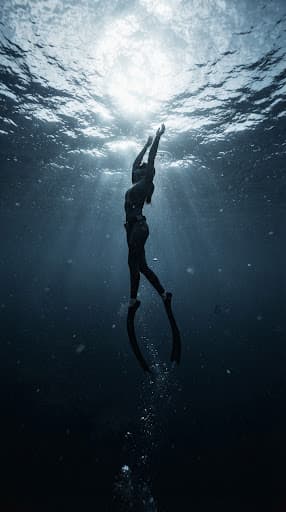
The day you realise you can stay underwater far longer than you thought.
How progress is assessed
- Coach observation during preparation and technical practice.
- Application with the required supervision, communication and recovery procedure.
- A progress note identifying what is stable, what needs work and the recommended next step.
Frequently asked questions
Who is Introduction for?
Beginners who want a supervised introduction to freediving and are comfortable in the water.
What are the prerequisites?
Age 18+ (16–17 with guardian consent) and able to swim 100m
How long does the programme take?
2 days / 4 sessions