.png&w=3840&q=75)
Why active, task-specific supervision is essential whenever breath-hold skills are practised.
A buddy is an active safety role
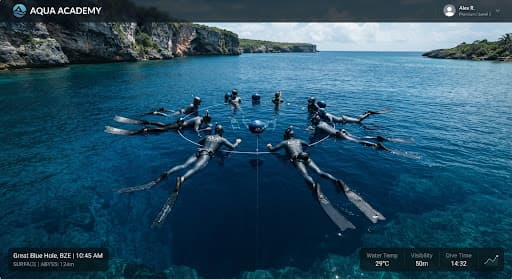
A buddy is not simply another person somewhere in the pool. The buddy understands the planned attempt, stays in a position to observe, is not distracted by a separate drill and knows the agreed response if the diver does not surface or recover normally.
Plan before the attempt
The pair agrees on the task, maximum scope, signals and who is watching whom. Supervision continues through the surface recovery rather than ending the moment the face leaves the water.
- One person performs while the other actively supervises.
- Do not rely on lifeguard presence as a substitute for a dedicated buddy.
- Stop when communication, visibility or readiness is uncertain.
- Practise rescue procedures only within qualified instruction.
Why “I know my limit” is not enough
Hypoxia can impair awareness and may occur without a reliable subjective warning. Previous success does not guarantee the next attempt. Never practise static, dynamic or depth breath-hold diving alone. Seek qualified instruction and appropriate medical advice for personal health concerns.